 When conversation at Thanksgiving dinner turned to health, personal stories poignantly told the tale of American healthcare.
A relative in his seventies talked about how open-heart surgery and a knee replacement enabled him to continue an active lifestyle. His care was covered by his health insurance. A future bicycle tour in Europe was being planned.
Another relative told how her friend had recently died from a stroke at age 44. It was caused by blood clots that could have been prevented with coumadin. But the woman couldn't afford it because she had no health insurance. Her friend's funeral was being planned.
The disparity in America's healthcare system is outrageous. In a land of plenty, people are dying because they can't afford basic care that could save their lives. Shouldn't we all have the opportunity to live abundantly?
If we simply addressed the disparities, America could improve the health of its population and the effectiveness of its healthcare system. The healthcare debate so often is about money. It's also about morals. We need to do what's right.
— Tom DeSanto
Image: Tom DeSanto
Thanksgiving Talk: Triumph and Tragedy


Gesundheit! Here's to America's health?
 Would the German model of healthcare work for America?
Under German law, every citizen must be insured and has a choice of public and private options, including more than 250 gestzliche Krankenkassen (state sickness funds) that are heavily regulated. The government determines healthcare standards and sets premiums based on risk, such as age and health status. Although the government collects premiums through taxes and pays each citizen's chosen health care provider, it stays out of the business of managing the day-to-day delivery of health care services.
Monthly costs in the German system amount to about 15 percent of the citizen's income, split by employee and employer. Spouses and children earn automatic coverage as soon as a wage-earner pays into the system. German children are never without health care because its covered by general tax revenue. The public option is for Germans earning up to $66,000 a year. Those who earn more can buy private insurance, but only 20 percent of the choose to do so.
How does it work? It depends whom you ask. No one is turned down for care. And the quality is considered world-class in major cities.
German citizens grumble about rising copayments and the quality of non-medical services and a reduction of preventive care.
Physicians grumble about being underpaid and overworked. In 2006, they took to the streets in protest. Until recent reforms that repealed the required prescribing of generics, they also felt over-regulated.
Citizens and physicians alike sometimes feel like they pawns in an epic battle about cost between the government and insurance companies.
No health system is perfect. But a competitive system with some centralized regulation and a public option that covers everyone could be a step forward, if Americans can agree on it.
The best thing, I believe, about the German system is full coverage for all children. This is a source of shame for America. Upcoming generations need a good start. Their future and the future of our country depend on it.
— Tom DeSanto
Image:clker.com
The Freakonomics of Chemotherapy
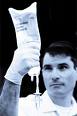 In Super Freakonomics, Levitt and Dubner paint a bleak view of the value of chemotherapy. Is their view cynical and fatalistic? Or is it clear and realistic?
The authors acknowledge the effectiveness of chemotherapy in treating leukemia, lymphoma, Hodgkin's disease and testicular cancers, but they label it "remarkably ineffective" overall, citing the following statistics:
- Although the 5-year survival rate for all cancer patients has been shown to be 63 percent, barely 2 percent of survival is attributable to chemotherapy. For multiple myeloma, soft-tissue sarcoma, melanoma of the skin and cancers of the pancreas, uterus, prostate, bladder and kidney, chemotherapy had zero discernible effect.
- A typical chemotherapy regime for non-small-cell lung cancer, which kills more than 150,000 Americans each year, costs $40,000, but only extends life by an average of 2 months.
- Cancer patients make up 20 percent of Medicare patients, but consume 40 percent of the Medicare drug budget.
- More than $40 billion is spent each year worldwide on cancer drugs.
If chemotherapy is so ineffective, why is it so widely prescribed? According to the authors, major reasons include:
- a natural response to financial incentives (Oncologists typically derive more than half their income from selling and administering chemotherapy drugs.)
- an attempt to inflate survival rates (A few extra months of life, expressed as a percentage, can look quite impressive.)
- an over-belief in the efficacy of chemotherapy
- a promise of hope for recovery or extending life
The observations made in Super Freakonomics cast light on some of the struggles inherent in reforming America's health system. Even if chemotherapy can be proven to be ineffective, its use is unlikely to be curtailed greatly.
The government will find it difficult to impose limits on constituents that put a "death squad" label on panels that evaluate efficacy and allocate resources.
Manufacturers of chemotherapeutic agents will not simply abandon incentives that promote chemotherapy. Their lobbyists will lean hard on legislators.
Oncologists want to save lives. Patients are willing to endure chemotherapy's toxic rage to overcome cancer. Families cling to it in desperation. And we all know cancer survivors who attribute their priceless second lease on life to their treatment regimen. Chemotherapy is hope.
With the advent of companion diagnostics, chemotherapy may one day be as effective as we hope and believe it should be. Oncologists would be able to match individual patients with the chemotherapy drug(s), dose and timing that works best for their specific biological makeup. They would also avoid chemotherapy when it would have little or no effect.
In the meantime, as I look at chemotherapy—and healthcare in general—in economic terms, it reminds me of a saying that is attributed to John Wanamaker. (Revisions are mine.)
"Half the money I spend on [healthcare] is wasted; the trouble is I don't know which half."
— Tom DeSanto
Source: Super Freakonomics, Steven D. Levitt and Stephen J. Dubner, HarperCollins 2009, pp. 84-86. Image: www.canceractive.com
Are Job Losses Truly Sickening?
 As of the end of October, America's unemployment rate reached 10.2 percent. More than 15.7 million people are out of work. It's the highest rate in 26 years.
Without a doubt, America's economic ills affect the health of its citizens. Loss of employment often limits access to health insurance, leading people to postpone or avoid treatment, stop taking medications and forgo preventive care. But studies have shown that the experience of job loss itself can have harmful health effects.
Workers who lost their job through no fault of their own, were twice as likely to report the onset of a new illness such as high blood pressure, diabetes or heart disease within 18 months, compared to those who remained employed. (Strully study, Harvard School of Public Health review of U.S. Panel of Income Dynamics data in 1999, 2001 and 2003)
When men became unemployed, symptoms of somatization, depression and anxiety increased. The men made significantly more visits to their physicians, took more medications and spent more days sick in bed than employed individuals, even though the number of diagnosis in the unemployed and employed groups were similar. (Linn, Sandifer and Stein study, American Journal of Public Health, May 1985)
Researchers in the 1970s estimated that every 1 percent increase in the unemployment rate in the U.S. leads to an additional 6,000 additional deaths each year. (Jin RL, The impact of unemployment on health: a review of the evidence. Canadian Medical Association Journal, Sept. 1, 1995)
All of us are sick of seeing the reports of rising unemployment. And rising unemployment is making our nation sicker.
Now, more than ever, we need to provide all our citizens with access to healthcare. It's a daunting task in times of economic duress. But we must not settle for anything less.
— Tom DeSanto
Image: Market Watch
Subscribe To


 Posts
All Comments
Posts
All Comments